• Home
  • About
  • Academic publications
  • Teaching
  • Current research
  • Media and expert opinion
  • Web and television
  • Photography
  • What's new
  • My top 5
  • Contact
Menu

Dr. Helene Thibault

Adresse postale
Nur-Sultan
Numéro de téléphone
Assistant professor, Nazarbayev University

Votre texte personnalisé ici

Dr. Helene Thibault

  • Home
  • About
  • Academic publications
  • Teaching
  • Current research
  • Media and expert opinion
  • Web and television
  • Photography
  • What's new
  • My top 5
  • Contact

Call for co-panelists - Men and masculinities in Central Asia - CESS Conference, Astana June 2026

février 26, 2026 Hélène Thibault

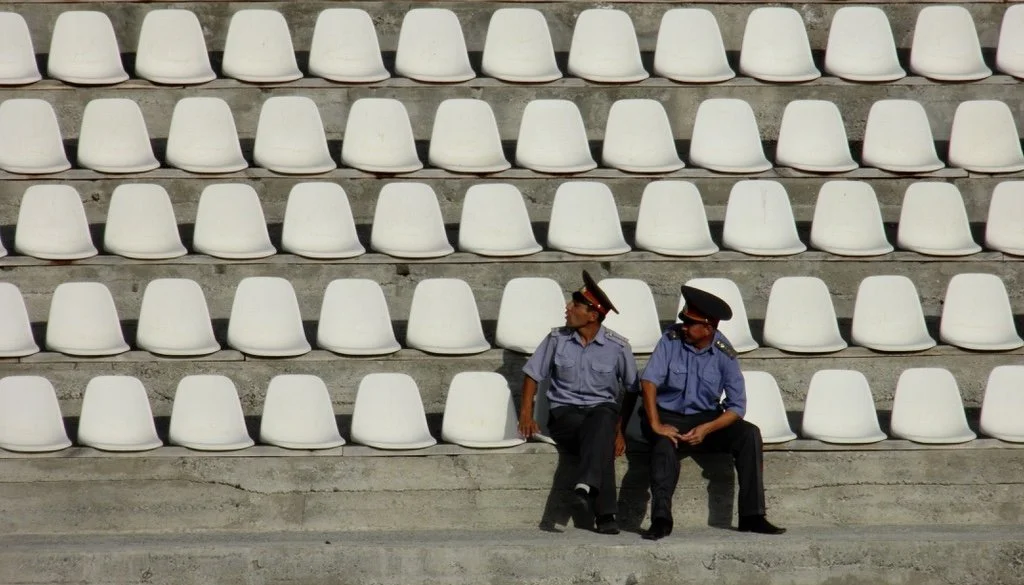
Policemen in Tajikistan. Photo taken by author.

Panel proposal for the Central Eurasian Studies Society Regional Conference, Astana 16-19 June 2026.
Deadline for proposals: March 15th, 2026.

Scholars specializing in Central Asia have increasingly adopted gender as a critical analytical lens. This allows to examine the diverse nuances of human experience, interrogating constructs of masculinity and femininity alongside broader gender identities and discourses as they intersect with colonialism, nationalism, and capitalism. However, scholarship has frequently conflated gender with women’s issues and lived realities, resulting in a significant oversight of male experiences within the existing literature. While recent scholarship on nationalizing states has primarily focused on patriarchal norms and the subjugation of women, only a limited number of studies have ventured beyond these themes. This panel proposes a critical reading to the existing gender narratives with a focus on men and masculinities. It aims at conceptualizing the construction of masculinities and its impact on the lived experiences of men.

Some of the themes that could be explored include, but are not limited to:

-          The construction of masculinity in Central Asian countries. How do political, social, and legal orders construct the idea of a man?

-          The intersection between masculine ideals and economic status. How does working-class masculinity differ from elite masculinity and/or from rural and urban masculinity?

-          The intersection of religion and masculinity. Do religious beliefs and practices influence the definition and performance of masculine behavior.

-              The intersection of masculinity and racial identity. How can we account for the diversity of lived experiences within the context of ethnic diversity?

-             The policing of masculine behavior. When and how do men police one another? What are the social costs for men who deviate from masculine norms?

-              Men’s behavior and role in the private sphere. Are domestic responsibilities shifting in Central Asian households?

 With this panel, we aim to mobilize a diverse range of perspectives that illuminate the complex lived experiences of Central Asian men. By doing so, we hope to move beyond reductive archetypes and generate critical insights into how masculinities are negotiated, performed, and transformed within the region’s historical, political, and cultural landscapes.

If interested, please contact Hélène Thibault, Associate professor and Department Chair, Political Science and International Relations, Nazarbayev University before March 10th. helene.thibault@nu.edu.kz

For more information about the conference, click here.

Commentaire

The role of Middle Powers. What Canada could learn from Kazakhstan

juin 3, 2025 Hélène Thibault

Photo of Congress Hall where the Forum took place.

I attended the Astana International Forum, which took place in the Kazakh capital on May 29 and 30, and came to the conclusion that Canada could learn from this type of international engagement and play a greater diplomatic role.

The second edition of the Astana International Forum, which could be compared to an "Asian Davos," is primarily a diplomatic project. The goal is to establish dialogue and exchange ideas by bringing together representatives from the political, economic, and intellectual spheres of various countries. In this respect, the Forum is somewhat disappointing because it does not propose a concrete project or tangible solutions to contemporary problems. However, the dynamics it generates are indicative of paradigm shifts on the international scene.

What makes this Forum unique is that it features representatives from middle powers and emerging countries. Hailing from Afghanistan, Austria, France, Macedonia, Malaysia, Rwanda, Congo, Qatar, and many others, the panelists primarily addressed the issues of the reshaping of the international order, energy transition, and multilateralism. The emerging consensus was this: we are witnessing the end of the unipolar order under American authority at a time when the next great power, China, has not yet achieved hegemonic status. In this context, cooperation among middle powers would contribute to maintaining a degree of global balance.

While Kazakhstan does not exemplify strong democratic practices, it nonetheless enjoys a good international standing and shares certain similarities with our country. Like Canada, is a vast, sparsely populated country that also finds itself sandwiched between its two powerful immediate neighbors, China and Russia, with which it cannot compete economically and militarily. Having adopted a multi-vector foreign policy since its independence, Kazakhstan maintains balanced relations with multiple actors rather than aligning itself exclusively with a single geopolitical bloc. By organizing this Forum, along with other initiatives such as the Astana process in 2017, which aimed to facilitate talks between warring parties in Syria, Kazakhstan is positioning itself on the international stage as a facilitator and a serious and essential interlocutor. This strategy also helps maintain this image of impartiality and balance the influence of major powers. As one speaker mentioned, a middle power is not obligated to be neutral or non-aligned; the idea is to be "multi-aligned" and maximize opportunities. As Canada's economic and political dependence on the United States becomes more acute, strengthening ties with other allies and establishing new partnerships are now top priorities. Prime Minister Mark Carney's decision to visit France and the United Kingdom as part of his first international visit is indicative of this direction.

This task is not necessarily easy since the political situation in the United States is currently, and rightly so, monopolizing a large part of the mediatic attention. More generally, the geography of America creates an effect of involuntary isolation from the rest of the world that prevents Canadian observers from understanding the magnitude of the transitions taking place in Eurasia, where Canada, perhaps with the exception of its mining companies, has limited outreach. Although Canada has traditionally played an important role on the international scene and enjoyed a good reputation, our country's weight on the global scale is currently marginal. Moreover, no Canadian representative was invited to the Forum, and having attended six panels in total, I noted that Canada was mentioned only once, and that for an insignificant detail. It is time for Canada to leverage its status as a middle power and its international reputation to develop a more ambitious foreign policy aimed at reducing its vulnerability to its powerful neighbor and increasing its diplomatic interventions.

Commentaire

My latest edited volume. Great research by Central Asian scholars.

février 13, 2024 Hélène Thibault

It’s in open access, click here to download the ebook for FREE!

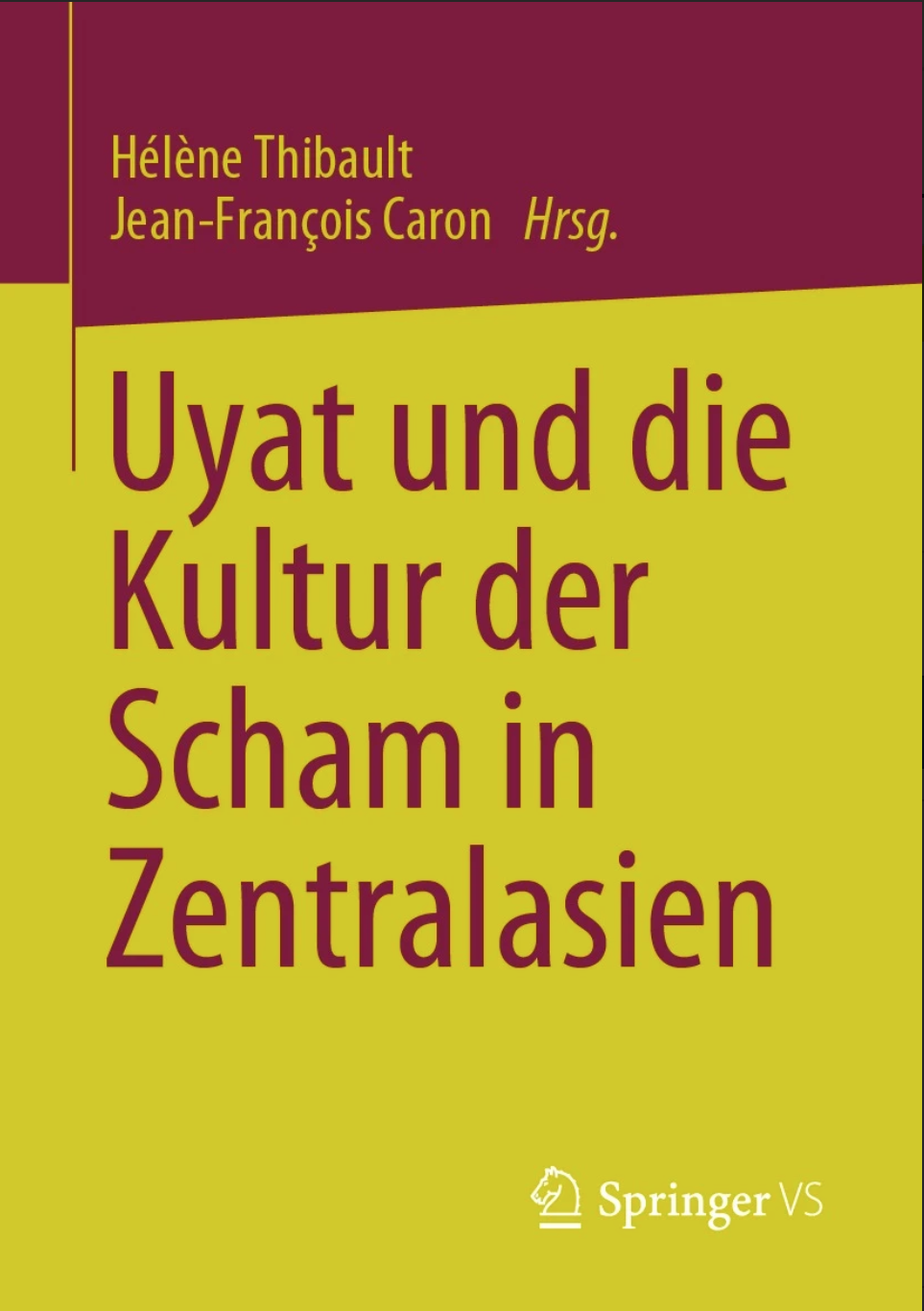
Our book on shame was translated into German!

juillet 2, 2023 Hélène Thibault

Available in soft cover and ebook versions. You can order the book on the publisher’s website here.

I authored the preface of this new exciting book from Routledge

mars 18, 2023 Hélène Thibault

P.S. Photo taken in the atrium of Nazarbayev University. The only place in Kazakshtan where you’ll find palm trees! :D

Older Posts →

School of Sciences and Humanities, Nazarbayev University, Astana, Kazakhstan